Having applied for the BTO young birder's grant to visit a bird observatory in Britain, I am required to provide a written review/feedback of my trip to the observatory so I have decided to place it here. The Bird Obs I visited is Bardsey Bird and Field Observatory. Bardsey is a small Island placed 1.9 miles off the Llŷn Peninsula in the Welsh county of Gwynedd. It was recently made famous within the birding community after having played host to the first Cretzchmar's Bunting not to be seen in the Shetland area. It's position in the Irish Sea, makes it a hotspot for particular migrants, including a great sea bird passage, not to mention the huge number of Manx Shearwater which breed on the island and are visible offshore by day. Having visited in late August, 22nd-29th, the majority of migrants hadn't quite reached the West Coast by that time and were still grounded on the east coast of Britain. However, the week still proved to be one of the most enjoyable birding weeks I have ever had, but we will get onto that later. Following the 30-minute boat trip over to the island, our first bird was a Tree Pipit which flew over whilst calling. However, I digress, this is not a summary but a review. The week was filled with plenty of activities organised by the Bird Observatory specifically for our visit, although the majority of our time was left to us just to generally go birding. Our counts were then compiled in the evening's 'Log' and were added to the official counts from the island which would be sent to the BTO or uploaded to BirdTrack. This was very compelling for me to actually observe each bird, be it common or scarce, and have those numbers make up future statistics!
One of the evenings that we were on the island was dedicated to recording and ringing Manx Shearwaters, especially adults, which is why we had to go out at night. A brief presentation by Steve (Obs Warden), before heading out was very informative and gave a perspective on Manx Shearwaters on a whole, with statistics I had previously no idea about. For example, the oldest Manx Shearwater had been ringed and recovered on Bardsey and was at least 50 years old, as well as being informed that around 90% of the worlds breeding population is contained in the United Kingdom! Being a bird in decline, makes these investigations immensely important and once again to be part of it was amazing. Some of us were allowed to ring a few individuals and encounter them at very close quarters where we could really enjoy them for what they are, instead of a black speck out to sea. A day or two after this event, we headed out to the burrows to record more Manx Shearwater numbers, this time by day as we were interested in the immature birds. We were instructed to pull some birds from their burrows (obviously not quite as crudely as I am describing), and bring them down to Steve where we would be able to process them ourselves! Another amazing experience!
During our stay we also managed to have two Bird Races, one against the Observatory staff and another against Skokholm. The Bird Race against Skokholm was throughout the week and joyfully we managed to beat them! But unfortunately the Bird Race between staff and NGBers didn't work out quite as well, due to us losing by a margin of only one species! However, James O'neill and I were able to locate a Barn Owl that evening which if it had been included could have possibly won us the competition! On our last evening Steve was kind enough to organise a quiz for us and all observatory staff. Sadly I clumsily shouted out answers resulting in my team sometimes getting slightly aggravated in me, but nevertheless the evening was very enjoyable.
On a whole the week proved to be a very memorable and enjoyable experience, meeting new people and getting to participate in the field studies of another Bird Observatory, and much more, was great fun. The adventure has encouraged me to try to volunteer at as many bird observatories across Britain and Europe as possible, hopefully starting in my Gap Year from Summer 2016.
Thank you for reading,
Ephraim

Monday, 28 September 2015

Monday, 21 September 2015
Grey Phalarope, Cuckmere Haven
Having failed to see a Grey Phalarope on Saturday, in Cambridgeshire, Me, Chris and Brendan headed down to Cuckmere Haven on the afternoon on Sunday. This time around we were far more successful, once we arrived at the correct location, on the east side of the estuary, we instantly connected with the bird which was a couple of meters away on a small pool. It then relocated to the large wetland next to it where it gave incredible views coming as close as a few feet away at points!


I also managed to visit Weston Turville Reservoir in Tring on Friday, and eventually see the Osprey which has been hanging around for a while now.

Grey Phalarope
I also managed to visit Weston Turville Reservoir in Tring on Friday, and eventually see the Osprey which has been hanging around for a while now.

Osprey at Weston Turville Reservoir, Tring
Thursday, 20 August 2015
When in doubt, visit Norfolk
Since it's the beginning of autumn, the first vagrants are beginning to turn up, although still in small numbers. Since there had been a small fall of Icterine Warbler in Norfolk on Friday, me and Chris decided it would be best to head in that direction. On the way up we made a short stop off to enjoy some brief views of 11+ Stone Curlew, and as we were leaving I managed to grab a few shots of a group through the car window. An absolutely extraordinary bird, which still baffles me now.

As we continued our journey up North, news came in of an Icterine Warbler at Burnham Overy, so we set the sat-nav, and in just over an hour we had arrived. We made our way to the bird, stopping occasionally to spot the odd bird. Once we arrived at the infamous apple tree we were met by surprisingly few birders, but still we had good views of the bird almost instantly! Having seen the target bird the pressure was off and we stayed for a while admiring the relatively showy bird.

Our next stop was Titchwell, because it always delivers a nice amount of interesting waders. There we managed to connect with: Ruff, Spoonbill, Little Stint, Greenshank, Black and Bar-tailed Godwit, Avocet, Grey Plover, Golden Plover, Sanderling and various other common waders. There we ended the day and headed home, happy with what we had got.
As we continued our journey up North, news came in of an Icterine Warbler at Burnham Overy, so we set the sat-nav, and in just over an hour we had arrived. We made our way to the bird, stopping occasionally to spot the odd bird. Once we arrived at the infamous apple tree we were met by surprisingly few birders, but still we had good views of the bird almost instantly! Having seen the target bird the pressure was off and we stayed for a while admiring the relatively showy bird.
Our next stop was Titchwell, because it always delivers a nice amount of interesting waders. There we managed to connect with: Ruff, Spoonbill, Little Stint, Greenshank, Black and Bar-tailed Godwit, Avocet, Grey Plover, Golden Plover, Sanderling and various other common waders. There we ended the day and headed home, happy with what we had got.
Sunday, 9 August 2015
Germany 2015
Inventive title, huh? Those of you who follow me on twitter will know that from the 23rd of July till the 3rd of August I was on a trip to Germany. Since I have relatives in Germany I am a frequent visitor of solely Rheinland-Pfalz (one of the larger provinces of Germany). However, because of the book "Vogel Beobachten in Sud-Deutschland" (Birdwatching in South Germany), which I had received as a birthday gift earlier that year, I came to the conclusion it was time I visited other parts of the country half of me is from. A particular site caught my attention with the brightly coloured word Bee-eater, this was the Kaiserstuhl.
The Kaiserstuhl is a small range of hills found in Baden-Wurttemberg, which have a volcanic origin. Now because of its hot climate and steep hills it is used for growing a wine crop, which leads the landscape to be quite unique. It is the hottest place, found in Germany, therefore it plays host to a range of exotic Mediterranean species of bird. These include: White Stork, Honey Buzzard, Peregrine, Little Owl (not introduced like in Britain), Bee-eater, Hoopoe, Red-backed Shrike and Cirl Bunting. Basically the place had a lot of desired species.

The trip was split into two major legs, the first being to my Grandma in Rheinland-Pfalz and then to the Kaiserstuhl in Baden-Wurttemberg.

We stayed with my Grandma for a few days before pressing on, which gave me time to explore the local area and pick up on some continental species. One short trip produced Crested Tit, two families of Red-backed Shrike (both with Juvs.), and a couple of Black Redstarts among other things.

I also managed to visit the local wetland which is a half an hour cycle away, where within an hour I managed to see two Common Sandpiper, a Wood Sandpiper, some Stonechat and a hell of a lot of Hirundians. I also managed to hear a few Quail, in the surrounding fields.
Three days later, once we had eventually arrived in the Kaiserstuhl, I took the first opportunity I had to visit a sand-wall, which was only a 15 minute walk away from our self-catering in Oberbergen. My target was to try and find some Bee-eater. 10 minutes in I heard a distant rolling wader like call, and shortly after, I managed to pin it down to colourful thing itself. A couple of Bee-eater were flying around the sand-wall repeatedly calling in an inflecting tone, prrut, prrut, prrut...

Having quickly managed to find Bee-eater, the week became far more relaxed and I spent a large amount of time just admiring the incredible birds from a distance, and occasionally having a fly by Honey Buzzard, which would always lighten the mood.


On one of the days I made a trip into Freiburg, which has a large breeding population of Alpine Swift, which could be as large as 260 breeding pairs! With such a large amount it would have been hard not to be successful, and I saw my first within half an hour. The rest of the time I spent trying to capture a decent picture, but because of the speeds they flew past and the infrequency it was a very difficult task.


The last day was dedicated to trying to see Hoopoe, as they had so far evaded me. One of the neighboring towns was rumored to be the best sight in Kaiserstuhl to see them, so that is where I went. After two hours of searching I had basically given up, but when I reached a viewpoint which was slightly more elevated I had hopes for a flyby. As soon as this thought had gone through my head a Hoopoe flew over me and into the field below. It was quite distant so I tried to get closer, but failed to see it again. However, a Red-backed Shrike popped out of the hedge to console me and shortly after I managed to pick out a flyby Golden Oriole! A bird which I had had no intention of seeing. However, the fun didn't stop there, instead a short walk on I managed to connect with another couple of Bee-eater and a fly over Black Kite, which performed well. I hung about the area for another hour or two but wasn't successful, apart from having distant views of a perched Hoopoe. I went home with a huge smile across my face and was completely content.

In conclusion, the trip had been a success and I had managed to enjoy all the birds I had set out to see. Some of which had performed very well.
We stayed with my Grandma for a few days before pressing on, which gave me time to explore the local area and pick up on some continental species. One short trip produced Crested Tit, two families of Red-backed Shrike (both with Juvs.), and a couple of Black Redstarts among other things.
Red-backed Shrike
I also managed to visit the local wetland which is a half an hour cycle away, where within an hour I managed to see two Common Sandpiper, a Wood Sandpiper, some Stonechat and a hell of a lot of Hirundians. I also managed to hear a few Quail, in the surrounding fields.
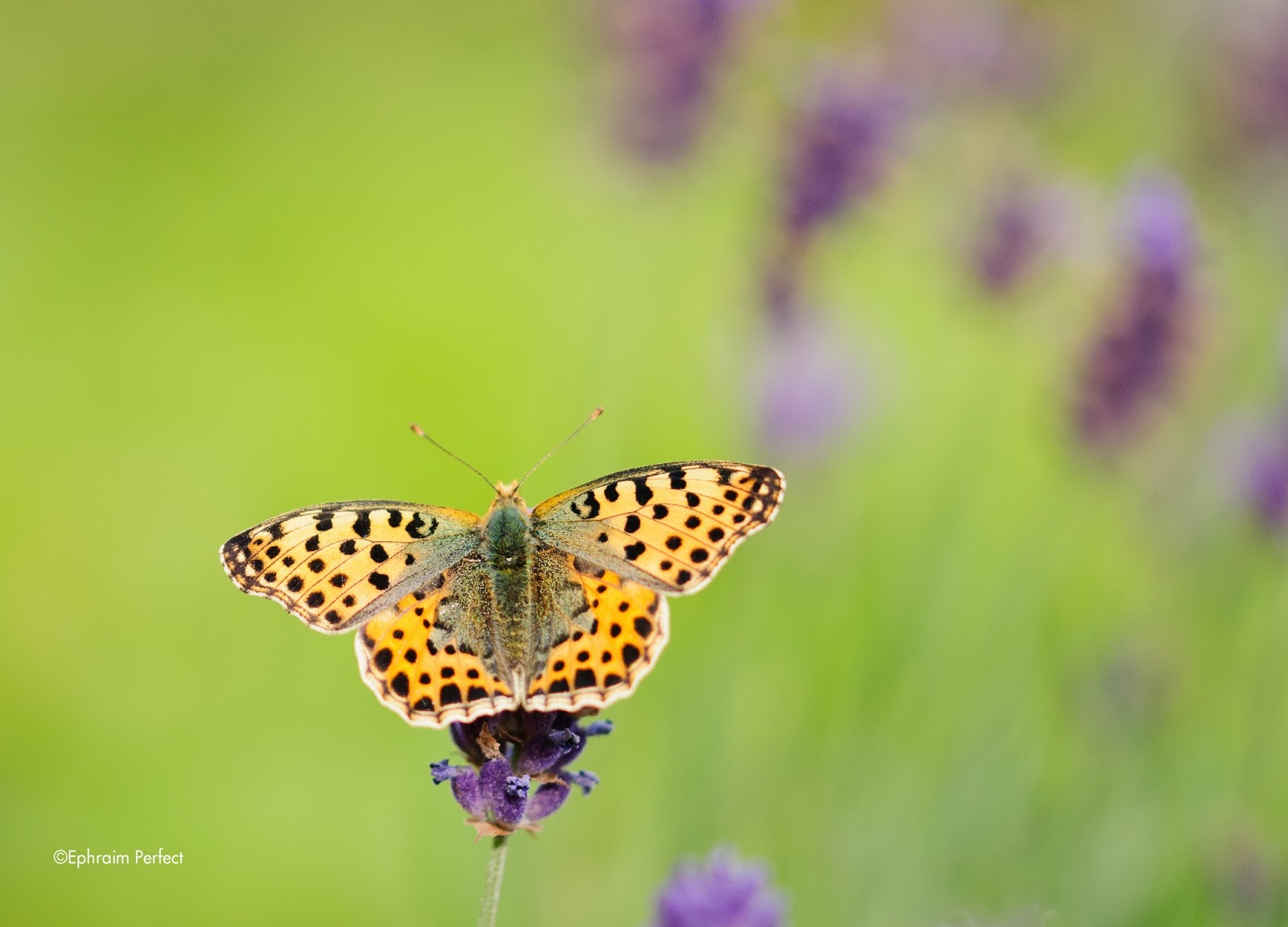
Queen of Spain Fritillary
Three days later, once we had eventually arrived in the Kaiserstuhl, I took the first opportunity I had to visit a sand-wall, which was only a 15 minute walk away from our self-catering in Oberbergen. My target was to try and find some Bee-eater. 10 minutes in I heard a distant rolling wader like call, and shortly after, I managed to pin it down to colourful thing itself. A couple of Bee-eater were flying around the sand-wall repeatedly calling in an inflecting tone, prrut, prrut, prrut...
Bee-eater
Having quickly managed to find Bee-eater, the week became far more relaxed and I spent a large amount of time just admiring the incredible birds from a distance, and occasionally having a fly by Honey Buzzard, which would always lighten the mood.

Bee-eater
On one of the days I made a trip into Freiburg, which has a large breeding population of Alpine Swift, which could be as large as 260 breeding pairs! With such a large amount it would have been hard not to be successful, and I saw my first within half an hour. The rest of the time I spent trying to capture a decent picture, but because of the speeds they flew past and the infrequency it was a very difficult task.
Alpine Swift
The last day was dedicated to trying to see Hoopoe, as they had so far evaded me. One of the neighboring towns was rumored to be the best sight in Kaiserstuhl to see them, so that is where I went. After two hours of searching I had basically given up, but when I reached a viewpoint which was slightly more elevated I had hopes for a flyby. As soon as this thought had gone through my head a Hoopoe flew over me and into the field below. It was quite distant so I tried to get closer, but failed to see it again. However, a Red-backed Shrike popped out of the hedge to console me and shortly after I managed to pick out a flyby Golden Oriole! A bird which I had had no intention of seeing. However, the fun didn't stop there, instead a short walk on I managed to connect with another couple of Bee-eater and a fly over Black Kite, which performed well. I hung about the area for another hour or two but wasn't successful, apart from having distant views of a perched Hoopoe. I went home with a huge smile across my face and was completely content.

Find the moth and ID it...
In conclusion, the trip had been a success and I had managed to enjoy all the birds I had set out to see. Some of which had performed very well.
Thursday, 21 May 2015
Feeding my twitching habits
It's that time of year again, Spring migration is kicking off and me and many others are stuck inside, watching countless reports of birds come in on the phone. Never the less, I have managed to loosen the chains slightly and on Saturday I was able to catch a lift with Ian Bennell to see the long staying Greater Yellowlegs in Hampshire. On arriving the bird was still showing which made for an easy tick, and enjoyable observation. Whilst looking at it I compared it to it's smaller cousin, the larger, more muscular body gave the bird away instantly and it seem to largely resembled a Greenshank, with it's upturned bill and strong streaking.


Greater Yellowlegs
Following my second to last exam, my mother offered to drive me to a local twitch, if I put in a good amount of effort into my exams. I was absolutely thrilled when a Red-necked Phalarope arrived on Broom GPs, a bird I had hoped to see since I first opened a field guide. The reserve had a surprisingly good environment, with habitat for many interesting migrant. Which has been seen in its recent history, starting with a White-winged Black Tern and Temminck's Stint (which is incredibly good, for an inland patch). The Red-necked Phalarope although distant, showed nicely only being disturbed by a resident Redshank, which appeared to be a racist :).
Gypsy Lane, East Pit
Red-necked Phalarope
Subscribe to:
Comments (Atom)